
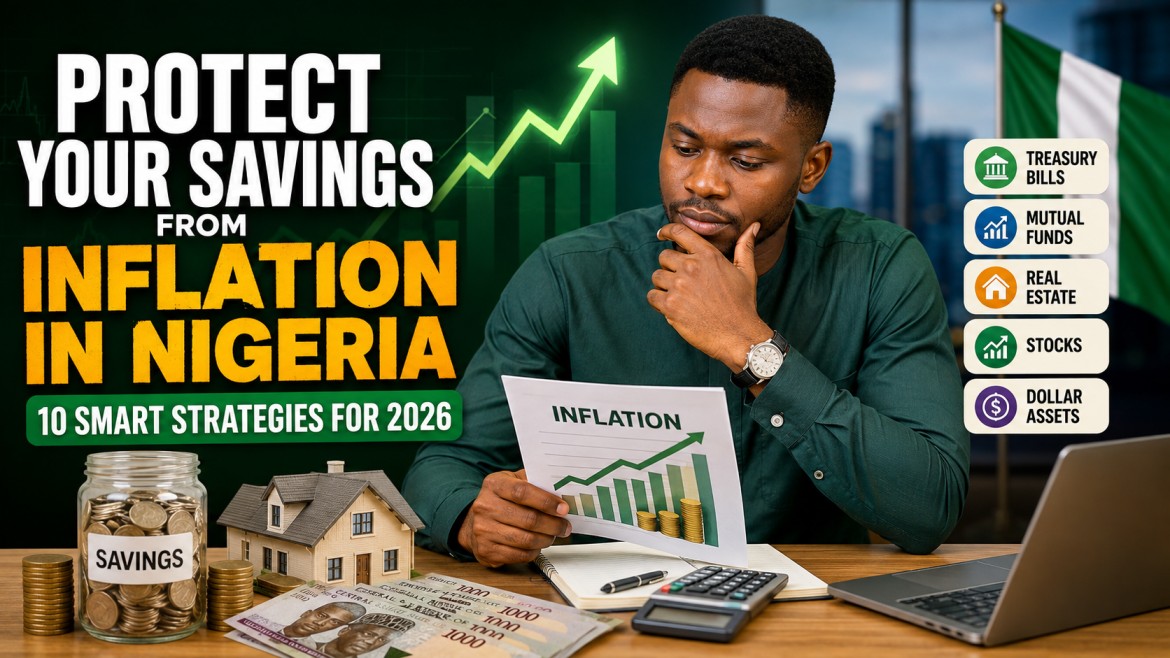
Inflation has become one of the biggest financial challenges facing Nigerian households and small business owners. When prices rise faster than the value of money sitting idle in a savings account, purchasing power quietly erodes, even if the account balance stays the same. For many Nigerians, this means the naira saved today may buy noticeably less a year from now.
The good news is that with the right strategies, it is possible to reduce the impact of inflation on your finances and, in some cases, grow your wealth faster than prices rise. This guide breaks down practical, realistic steps anyone in Nigeria can take to protect their savings in 2026.
Read also: How to Open a Domiciliary Account in Nigeria (Full Requirements & Guide 2026)
Understanding Why Inflation Hurts Savings
Inflation refers to the general increase in the price of goods and services over time. When inflation rises faster than the interest earned on a savings account, the real value of that money falls. In simple terms, money that isn’t growing is effectively shrinking.
Nigeria has experienced periods of high inflation driven by factors such as currency depreciation, fuel price adjustments, food supply challenges, and global economic pressures. Because of this, keeping large amounts of cash in a low-interest savings account is rarely enough to preserve wealth long-term.
1. Move Beyond Traditional Savings Accounts
Standard savings accounts in Nigerian banks often offer interest rates far below the inflation rate. While they are useful for emergency funds and short-term needs, relying on them alone means your money loses value over time.
Instead, consider keeping only three to six months of expenses in a regular savings account, and explore higher-yield alternatives for the rest of your savings.
2. Consider Treasury Bills and Government Bonds
Nigerian Treasury Bills (NTBs) and FGN Savings Bonds are considered relatively low-risk investment options because they are backed by the government. They often offer better returns than standard savings accounts and can help cushion the effects of inflation, especially during periods of high interest rates.
These instruments are ideal for people who want steady, predictable returns without exposing their money to high market volatility.
3. Explore Mutual Funds and Money Market Funds
Money market funds pool money from multiple investors to invest in low-risk, short-term instruments such as treasury bills and commercial papers. They are managed by professional fund managers and are a popular option for Nigerians looking for better returns than a savings account, with relatively low risk.
Mutual funds, more broadly, allow investors to diversify across various asset classes, reducing the risk of relying on a single investment type.
4. Invest in Dollar-Denominated Assets
Because the naira has experienced significant depreciation against major currencies, some Nigerians choose to hold a portion of their savings in dollar-denominated investments, such as Eurobonds, dollar mutual funds, or domiciliary accounts. This can help preserve value when the naira weakens, though it’s important to research any platform thoroughly and understand the associated risks and regulations before investing.
5. Put Money Into Real Estate
Real estate has historically been a strong hedge against inflation in Nigeria. Property values and rental income tend to rise over time, often outpacing inflation, especially in high-demand urban areas like Lagos, Abuja, and Port Harcourt.
Real estate does require a larger upfront capital commitment, but options like real estate investment trusts (REITs) allow investors to gain exposure to property markets with smaller amounts of money.
6. Diversify Into Stocks
The Nigerian Exchange (NGX) offers opportunities to invest in shares of established companies. Historically, equities have the potential to outpace inflation over the long term, though they come with higher short-term volatility.
For beginners, starting with well-established, dividend-paying companies or index-tracking funds can reduce risk while still offering growth potential.
7. Consider Agricultural and Commodity-Backed Investments
Agriculture remains a major part of Nigeria’s economy, and several platforms now allow individuals to invest in farming projects or commodity-backed schemes. These can offer attractive returns, but it’s essential to research the credibility of any platform before committing funds, as this sector has seen its share of unregulated schemes.
8. Build Multiple Income Streams
Protecting savings isn’t only about where you invest, it’s also about increasing your earning capacity. Side businesses, freelancing, digital skills, and passive income sources can help offset the impact of rising prices by increasing your overall income, giving you more room to save and invest.
9. Budget With Inflation in Mind
Reviewing your budget regularly is essential in an inflationary environment. Prices that were reasonable a few months ago may no longer reflect current costs. Building flexibility into your budget, prioritizing essential expenses, and cutting unnecessary spending can help you preserve more of your income for savings and investments.
10. Avoid Keeping Large Amounts of Idle Cash
Physical cash loses value the fastest during inflationary periods since it earns no return at all. While having some cash on hand for emergencies is wise, keeping large sums outside of interest-bearing or growth-oriented accounts means missing out on ways to offset inflation’s effects.
Final Thoughts
Protecting your savings from inflation in Nigeria requires a proactive, diversified approach. Relying solely on a traditional savings account is unlikely to preserve your wealth in the current economic climate. By exploring options such as treasury bills, money market funds, real estate, equities, and dollar-denominated assets, while also building additional income streams, you can better safeguard your finances against the effects of inflation in 2026 and beyond.
As with any financial decision, it’s wise to do thorough research or consult a licensed financial advisor before committing significant funds to any investment option, since risk tolerance and financial goals vary from person to person.
Frequently Asked Questions (FAQs)
1. What is the safest way to protect savings from inflation in Nigeria? Government-backed instruments like Nigerian Treasury Bills and FGN Savings Bonds are generally considered among the safer options, as they carry government backing and offer more predictable returns than the stock market.
2. Is it a good idea to save in dollars in Nigeria? Holding a portion of savings in dollar-denominated assets can help protect against naira depreciation. However, it’s important to use regulated platforms and understand any fees, risks, or regulatory requirements involved.
3. Can real estate really protect against inflation? Yes, real estate has historically served as a strong inflation hedge in Nigeria, as property values and rents tend to rise over time. However, it requires significant capital and comes with liquidity challenges compared to other investments.
4. How much of my savings should I invest instead of keeping in a bank account? While this depends on personal circumstances, a common approach is to keep three to six months of expenses in an easily accessible account and consider investing the remainder in a mix of low- and moderate-risk options based on your goals and risk tolerance.
5. Are money market funds better than a regular savings account? Money market funds often provide higher returns than standard savings accounts because they invest in short-term, relatively low-risk instruments. They are generally considered a good alternative for people seeking better returns with manageable risk.
6. What role does budgeting play in fighting inflation? Budgeting helps you track rising costs, cut unnecessary expenses, and free up more money for savings and investment, which is essential when the cost of living keeps increasing.
7. Should I invest in stocks if I’m new to investing? Beginners can start with well-established, dividend-paying stocks or diversified funds to reduce risk while still benefiting from potential long-term growth. It’s advisable to research thoroughly or seek guidance from a licensed financial advisor before investing.