
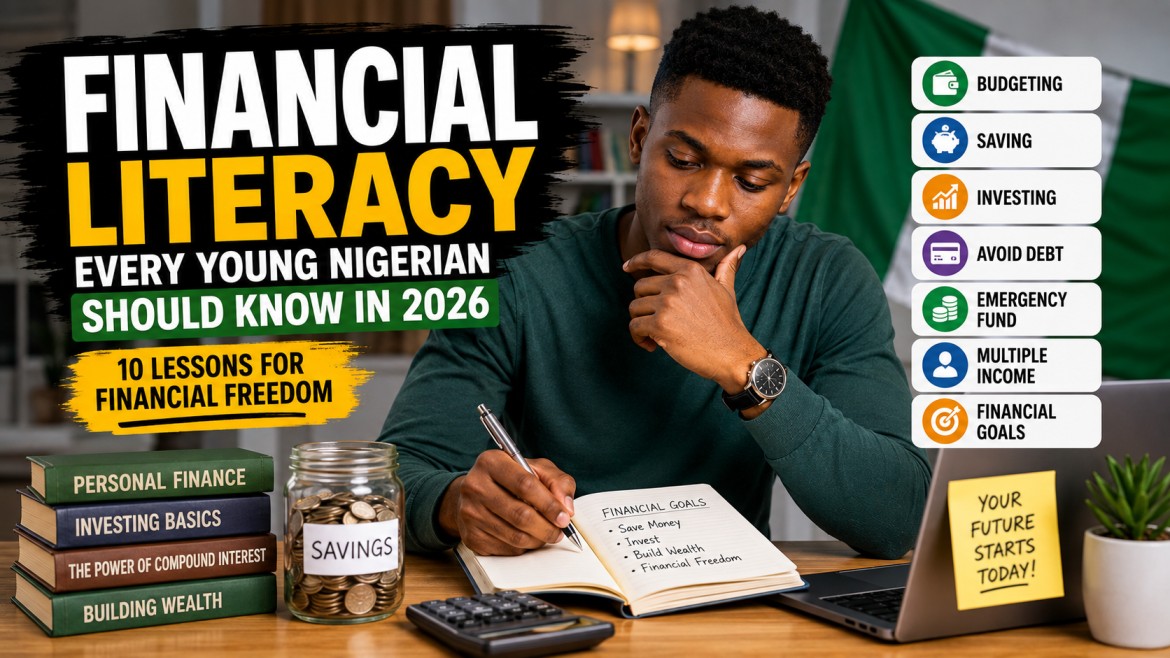
Financial literacy is one of the most valuable skills a young person can develop, yet it’s rarely taught in schools. For many Nigerian youths, money lessons are learned the hard way, through trial, error, and sometimes costly mistakes. With rising living costs, unpredictable job markets, and increasing access to digital finance tools, understanding how to manage money wisely has never been more important.
This guide breaks down ten practical financial literacy lessons every young Nigerian should understand in 2026, whether you’re a student, a fresh graduate, or just starting your career.
Read also: How to Protect Your Savings From Inflation in Nigeria (2026 Guide)
1. Needs and Wants Difference
One of the foundational lessons in personal finance is distinguishing between what you truly need and what you simply want. Needs are essentials, food, transportation, housing, and basic utilities. Wants are non-essential purchases that bring comfort or enjoyment but aren’t necessary for survival.
Young people who master this distinction early are better equipped to make intentional spending choices rather than falling into impulsive buying habits, especially with the constant pressure of social media and lifestyle comparison.
2. Create and Stick to a Budget
Without one, it’s easy to lose track of where your income goes each month. A simple budgeting method involves dividing income into categories such as essentials, savings, and discretionary spending, then tracking expenses against that plan.
Several free budgeting apps and even basic spreadsheet templates can help Nigerian youths track spending patterns and identify areas where they can cut back.
3. Start Saving Early, Even in Small Amounts
Many young people assume saving isn’t possible until they earn “enough” money. In reality, building the habit of saving, even small amounts consistently, matters more than the amount itself early on. Setting aside a fixed percentage of any income, no matter how small, helps build both a financial cushion and a long-term saving mindset.
Automating savings through a bank’s standing order or savings app can make this process easier and more consistent.
4. Understand How Compound Interest Works
Compound interest is often called one of the most powerful forces in personal finance. It means earning interest not just on your original savings, but also on the interest that accumulates over time. The earlier you start saving or investing, the more time your money has to grow through compounding.
This lesson highlights why starting early, even in your early twenties, can make a significant difference in long-term financial outcomes compared to starting a decade later.
5. Avoid Unnecessary Debt
Not all debt is bad, some, like loans for education or business investment, can be productive. However, high-interest consumer debt, such as loans taken for lifestyle spending or impulsive purchases, can quickly spiral out of control and trap young people in a cycle of repayment.
Before taking any loan, it’s important to understand the interest rate, repayment terms, and whether the borrowed money will generate value or simply create a financial burden.
6. Build an Emergency Fund
An emergency fund is money set aside specifically for unexpected expenses, such as medical bills, urgent repairs, or a sudden loss of income.
For young Nigerians just starting out, even a small emergency fund can prevent the need to borrow money or sell assets during unexpected situations.
7. Learn the Basics of Investing
Saving alone often isn’t enough to build long-term wealth, especially with inflation reducing the value of idle cash over time. Learning the basics of investing, including options like mutual funds, treasury bills, stocks, and real estate, can help young people grow their money over time.
Many investment platforms in Nigeria now allow individuals to begin with modest sums, making it accessible for students and young professionals alike.
8. Understand Your Credit and Financial Reputation
As more financial services in Nigeria become digitized, having a good financial reputation, including timely loan repayments and responsible use of credit, is becoming increasingly important. Poor financial habits, like defaulting on loans, can limit access to future financial opportunities, including mortgages or business financing.
Young people should treat every financial commitment seriously, even small loans, as it can shape future access to credit.
9. Diversify Your Income Sources
Relying on a single source of income can be risky, especially in an unpredictable job market. Learning a marketable skill, exploring freelance opportunities, or starting a small side business can provide additional income streams and financial security.
Multiple income sources also provide more flexibility for saving, investing, and handling unexpected expenses without derailing long-term financial goals.
10. Set Clear Financial Goals
Financial literacy isn’t just about managing money day-to-day, it’s also about planning for the future. Setting clear, specific goals, such as saving for further education, starting a business, or buying a home, gives direction to financial decisions and helps measure progress over time.
Breaking large goals into smaller, achievable milestones makes them feel more attainable and keeps motivation high along the way.
Final Thoughts
Financial literacy is a lifelong skill, and the earlier Nigerian youths begin learning these lessons, the stronger their financial foundation will be. From budgeting and saving to understanding debt and investing, these ten lessons provide a practical starting point for building healthy money habits in 2026 and beyond.
While these lessons offer a solid foundation, individual financial situations vary, so it can be helpful to consult a licensed financial advisor for guidance tailored to specific goals and circumstances.
Frequently Asked Questions (FAQs)
1. Why is financial literacy important for Nigerian youths? Financial literacy equips young people with the knowledge to make informed decisions about saving, spending, and investing, helping them avoid common money mistakes and build long-term financial stability.
2. What is the best way for a student to start saving money? Students can start by setting aside a small, consistent percentage of any income or allowance, even if it’s a small amount, and gradually increasing it as their income grows.
3. How can young Nigerians start investing with little money? Several investment platforms in Nigeria allow individuals to start with small amounts, such as mutual funds or fractional investment options, making investing accessible even on a limited budget.
4. What’s the difference between good debt and bad debt? Good debt is typically used for investments that can generate future value, such as education or business capital, while bad debt often comes from high-interest borrowing for non-essential spending.
5. How much should be saved for an emergency fund? A common guideline is to save enough to cover three to six months of essential living expenses, though the exact amount depends on individual circumstances and financial obligations.
6. Can financial literacy really be learned outside the classroom? Yes, financial literacy can be learned through books, online courses, mentorship, and practical experience managing personal finances, even without formal classroom instruction.
7. Why does starting to save or invest early matter so much? Starting early allows more time for savings or investments to grow, particularly through compound interest, which can significantly increase the value of money over the long term compared to starting later.