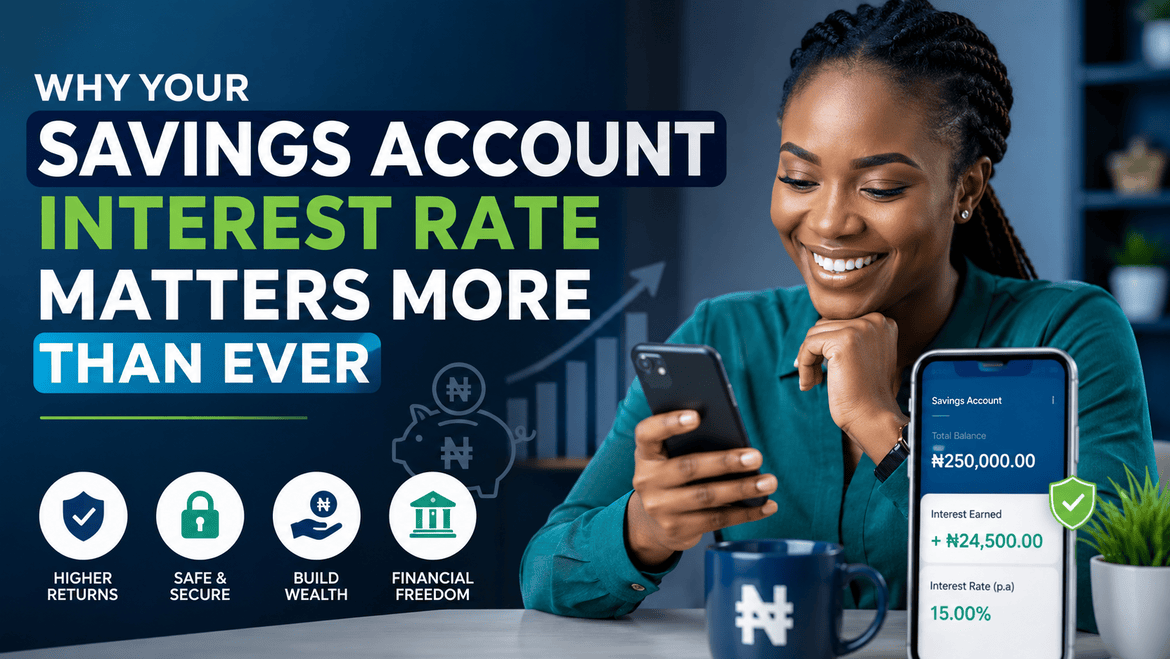
Why Your Savings Account Interest Rate Matters More Than Ever
Leaving money in an account that pays little to nothing in interest is one of the quietest ways Nigerians lose value every year. With inflation still running well above what most traditional bank accounts offer, a standard savings account paying two or three percent a year isn’t really protecting your money, it’s watching it lose purchasing power in slow motion.
The good news is that Nigeria’s savings landscape has changed a lot in the last few years. Between licensed microfinance banks, mobile-first digital banks, established savings apps, and government-backed Treasury bills, there are now genuine ways to earn double-digit returns on money you’re not actively spending. The challenge isn’t finding an option, it’s knowing which ones are trustworthy, which fit your goals, and which actually pay what they advertise.
This guide breaks down the strongest categories of high-interest savings accounts available to Nigerians right now, what to expect from each, and how to choose the right one for your situation.
A high-interest savings account is simply one that pays a meaningfully higher return than what a traditional commercial bank offers on a regular savings account. Where standard bank savings accounts often sit in the low single digits annually, the accounts covered here typically range from around 10% to over 20% per year, depending on the provider, the product type, and whether your funds are flexible or locked away for a fixed period.
Before comparing specific institutions, it helps to understand the broad categories these products fall into:
- Digital banks and microfinance banks: Mobile-first institutions that often pay more because they save on the overhead of running branch networks.
- Savings and investment apps: Platforms built specifically around helping people save consistently, often with bonus interest for locking funds.
- Treasury bills: Short-term government securities that are effectively risk-free and tend to offer some of the strongest returns available to everyday savers.
Each category trades off differently between rate, accessibility, and risk, which is why the “best” option really depends on what you’re saving for.
Read also: 10 Best Savings Apps in Nigeria (2026): Compared, Reviewed & Ranked
Digital Banks and Microfinance-Backed Savings Accounts
Several CBN-licensed digital banks and microfinance institutions have built their entire customer base around offering better rates than traditional banks. These institutions are regulated and typically carry NDIC deposit insurance, which means your money is protected even though the provider isn’t a legacy bank.
What sets these accounts apart is flexibility. Many now offer both a flexible savings option, where you can withdraw anytime and still earn a competitive rate, and a locked or “fixed” savings option, where committing your funds for a set period earns a noticeably higher return. Locked savings products can pay considerably more than flexible ones, sometimes reaching into the high teens or beyond for longer commitment periods, while flexible options tend to land in a more moderate but still respectable range.
This combination makes digital banks a strong pick for people who want one platform that can handle both an emergency fund and longer-term savings goals.
Popular Savings and Investment Apps
Beyond digital banks, Nigeria has a well-established ecosystem of savings apps designed to build consistent saving habits. These platforms usually offer a few different products under one roof: an auto-save feature for everyday saving, a target-savings tool for specific goals, and a locked-savings option for those chasing the highest possible rate.
The appeal of these apps isn’t only the interest rate, it’s the structure. Features like automated deductions, goal tracking, and withdrawal restrictions on locked plans help many users save more consistently than they would with a regular bank account they can dip into at any time. Rates on flexible plans tend to be moderate, while locked plans reward patience with rates that scale based on how long you’re willing to leave the funds untouched.
For anyone who struggles with saving discipline, this category is often more valuable for the habit it builds than for the raw interest rate alone.
Fixed Deposits at Traditional Commercial Banks
Nigeria’s major commercial banks also offer fixed deposit products that pay considerably more than their standard savings accounts, though usually less than the top digital banks or apps. Fixed deposits require committing a lump sum for a defined tenor, commonly ranging from 30 days to a year, with penalties for early withdrawal.
The trade-off here is one of trust and convenience versus raw returns. Established banks come with long track records, extensive branch networks, and full regulatory backing, which appeals to savers who value stability over squeezing out the last percentage point of yield.
Treasury Bills: The Government-Backed Option
For savers who want the lowest possible risk with strong returns, Treasury bills remain hard to beat. Issued by the federal government, T-bills are considered effectively risk-free in naira terms because they’re backed by the government’s ability to pay. With monetary policy remaining relatively tight, yields on T-bills have stayed attractive, often outperforming most bank savings products.
You can typically access T-bills through your bank’s investment desk, a licensed stockbroker, or increasingly through investment apps that have simplified the buying process. The main drawback is accessibility, your money is tied up until maturity, and minimum investment amounts, while often modest, are usually higher than what’s required to open a basic savings account.
There’s no single “best” account for everyone, the right choice depends on your priorities:
- If you need instant access to your money, prioritize flexible savings accounts from digital banks or apps, even if the rate is slightly lower than locked alternatives.
- If you’re saving toward a specific future goal (rent, school fees, a business milestone), a locked savings plan or fixed deposit can offer a meaningfully higher rate in exchange for temporarily giving up access.
- If safety is your top concern, stick with NDIC-insured institutions and confirm the regulatory status of any digital bank or app before depositing funds.
- If you want the lowest-risk, government-backed option, Treasury bills are worth exploring, particularly for larger sums you won’t need in the short term.
Whichever option you choose, always verify current rates directly with the provider before depositing money, since interest rates on all these products can and do change with monetary policy shifts.
Frequently Asked Questions
1. What is the highest interest rate on a savings account in Nigeria right now? Rates vary by provider and product type, but locked or fixed savings plans from digital banks and microfinance institutions currently tend to offer the highest returns, often well above what traditional commercial bank savings accounts pay. Always check the provider’s official platform for their current advertised rate, since these figures change periodically.
2. Are high-interest savings accounts in Nigeria safe? Many are. Look for providers licensed by the Central Bank of Nigeria (CBN) and covered by the Nigeria Deposit Insurance Corporation (NDIC), which insures deposits up to a set limit if the institution fails. Before opening an account, confirm the provider’s regulatory status on the CBN or NDIC website.
3. What’s the difference between flexible and locked savings accounts? Flexible savings accounts let you withdraw your money at any time, usually in exchange for a moderate interest rate. Locked savings accounts require you to leave your funds untouched for a chosen period, and in return, they typically offer a higher interest rate.
4. Can I lose money in a high-interest savings account? With regulated, NDIC-insured accounts, your principal is protected up to the insured limit even if the institution fails. The main “risk” with most savings products is opportunity cost, earning less than inflation, rather than losing your deposited capital outright.
5. Are Treasury bills better than a savings account? Treasury bills often offer higher, government-backed returns than most savings accounts, making them attractive for larger amounts you don’t need immediate access to. However, they typically require locking your funds until maturity and may have higher minimum investment amounts than a basic savings account.
6. How often is interest paid on these accounts? This depends entirely on the provider and product. Some pay interest upfront at the start of a locked term, others accrue daily and pay out at maturity or on withdrawal, and some traditional bank accounts credit interest monthly or quarterly. Always check the specific payment structure before committing funds.
7. Do I need a lot of money to start saving at a high interest rate in Nigeria? No. Many digital savings apps and microfinance banks allow you to start with a very small deposit, sometimes as low as a few thousand naira, making high-interest saving accessible even to first-time savers.